MIT-WPU
CARBONCAST
LIVE CARBON INTELLIGENCE NETWORK
● LIVE
⚡ BREAKING
⚡ DATA CENTERS CONSUME 240 TWh/YEAR — 1-2% OF ALL ELECTRICITY ON EARTH — SCHEDULERS IGNORE IT ENTIRELY   ●   CARBON INTENSITY VARIES 3× ACROSS REGIONS AND HOURS — SAME JOB, MASSIVELY DIFFERENT FOOTPRINT   ●   NAIVE FORECAST ERROR: UP TO ±106 gCO₂/kWh — OUR XGBOOST MODEL CUTS THIS BY 10×   ●   JOINT GAUSSIAN Σ: FIRST SYSTEM TO MODEL CROSS-REGION FORECAST ERROR CORRELATION   ●   MISO + PJM ERRORS MOVE TOGETHER ρ=0.41 — SPATIAL SHIFTING BETWEEN THEM IS FALSE SAFETY   ●   RISK-AWARE POLICY: [XX]% LOWER CARBON · [XX]% SLA RELIABILITY MAINTAINED   ●  
SCET · MIT WORLD PEACE UNIVERSITY · 2026
PREDICT
THE CARBON.
TRUST NEITHER.
A Risk-Aware Cloud Scheduling Framework under Workload & Carbon Prediction Uncertainty — jointly modeling both forecasts to deliver greener compute without breaking deadlines.
XGBoost · LightGBM Joint Gaussian Σ 6 US Grid Regions EIA-930 · 2022–2025 Rust Simulator FastAPI · Python
240 TWh data center energy/year
carbon variation across regions
6 US grid regions modeled
⛈ STORM WARNING · 01
MOTIVATION
& AIM
Cloud computing is the fastest-growing source of global electricity demand. Yet every scheduler running today makes the same fatal assumption — that forecasts are perfect.
240
TWh per year
Global data center electricity consumption in 2022 — equivalent to the entire electricity demand of Argentina.
📈
20%
annual growth rate
Cloud workloads are growing at 20% annually. Without carbon-aware scheduling, emissions scale proportionally.
🎯
0%
schedulers model uncertainty
No existing scheduler jointly models both workload runtime uncertainty AND carbon intensity uncertainty. This is the gap we fill.
THE CORE PROBLEM
If forecast_carbon is wrong → promised savings vanish
If runtime is wrong → SLA deadline breaks
Current systems ignore BOTH risks simultaneously
Aim 1: Probabilistic runtime prediction with SLA risk score
Aim 2: Carbon intensity forecasting with joint uncertainty model
Aim 3: Risk-aware scheduler balancing emissions, cost & reliability
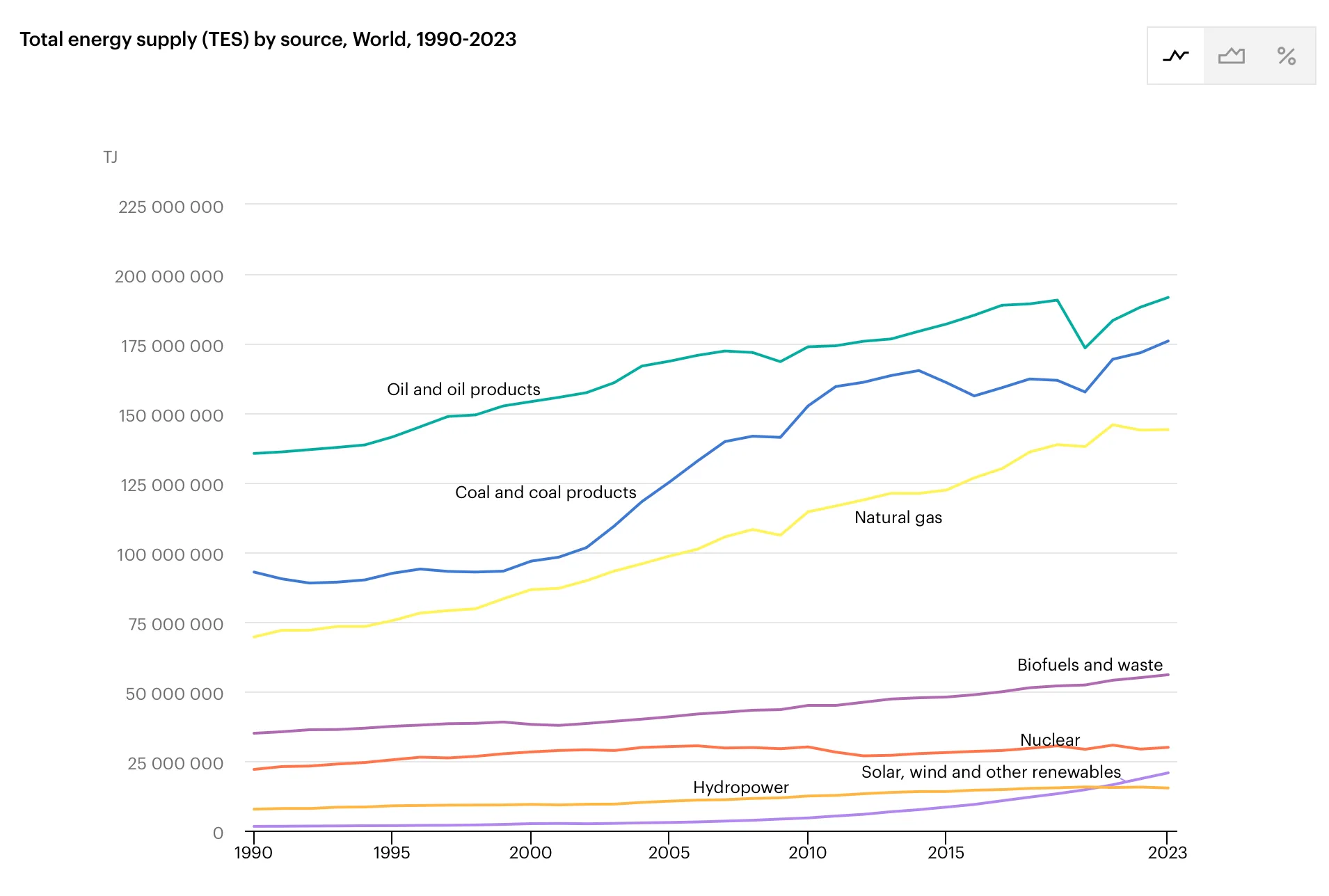
Energy generation by source

Renewable sources are growing; but nowhere close to non-renewable sources

Ignoring energy depletion is dangerous. Its effects are already visible through climate stress, infrastructure pressure, and rising sustainability risk across industries.
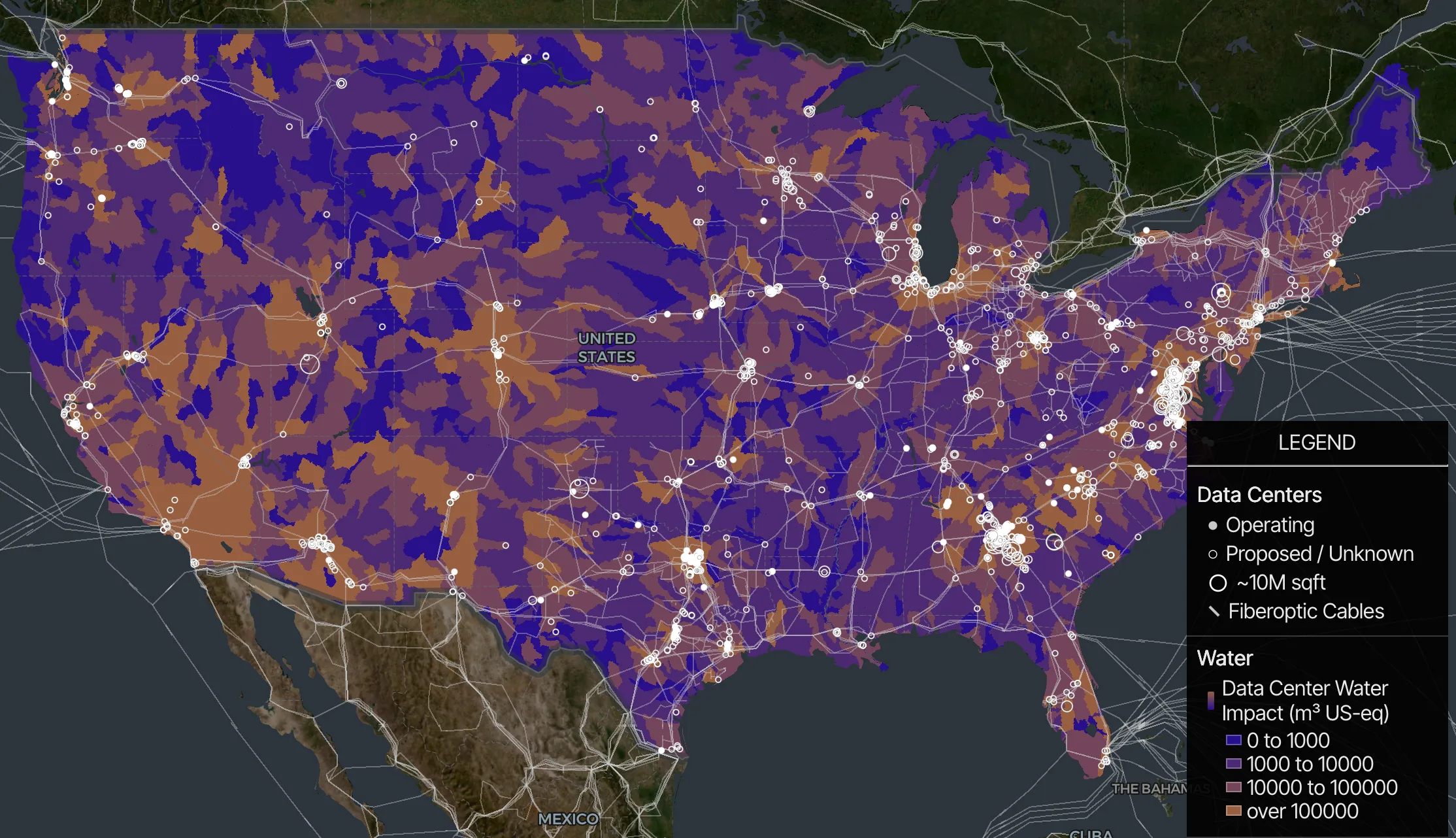
Water usage by datacenters

Datacenters have a significant effect on global power infrastructure

📡 DATA SOURCES · 02
DATASETS
Three real-world datasets powering the framework — spanning cloud workload traces and US grid electricity data from 2022 to 2025.
☁️
Google Cluster Trace
Workload Module
Detailed records of cloud job executions from Google's production cluster including CPU allocation, memory, task duration, job priority and machine metadata.
Features: CPU · Memory · Duration · Priority · Job Type
🏭
Alibaba Cluster Trace
Workload Module
Production workload traces from Alibaba's cloud infrastructure providing complementary diversity in job types, sizes, and arrival patterns for robust model training.
Features: Container tasks · Resource utilization · Runtime stats
EIA-930 Grid Monitor
Carbon Module
US Energy Information Administration hourly generation by fuel type (coal, gas, nuclear, wind, solar, hydro) across 6 major grid regions from 2022–2025.
3 years · Hourly resolution · 6 regions · Free & public
⚡ 6 US GRID REGIONS — CARBON INTENSITY OVERVIEW
CAISO
California
199 gCO₂/kWh
☀️ Solar + Gas
CLEANEST
ERCOT
Texas
288 gCO₂/kWh
💨 Wind Dominant
WIND VOLATILE
MISO
Midwest
393 gCO₂/kWh
⛈ Coal + Wind
DIRTIEST
NYISO
New York
251 gCO₂/kWh
💧 Hydro + Nuclear
STABLE
PJM
Mid-Atlantic
331 gCO₂/kWh
⚛ Nuclear + Gas
⚠ CORR. MISO
SWPP
Southwest
283 gCO₂/kWh
🌵 Wind + Coal
SEASONAL
🧠 TECHNICAL DEPTH · 03
MODELING &
ARCHITECTURE
Three tightly integrated modules — each solving one piece of the uncertainty puzzle, feeding into a unified risk-aware decision.
Workflow Stages

This visualisation shows a high level overview of how a request is processed end to end.

The stage visual below auto-plays once on first load. After that, use Next to move through each stage manually.

Workflow stage 1
Stage 1 of 8
01
🧠
WORKLOAD
PREDICTOR
SHRUTIKA MISHRA
XGBoost baseline — MAE 67s, 40% over naive
LightGBM quantile regression — calibrated 80% CI
Epistemic + aleatoric uncertainty modeled
SLA risk = P(Runtime > Deadline) via scipy normal survival
safe_to_delay binary signal to scheduler
OUTPUT → predicted_runtime · confidence_interval · sla_violation_risk · safe_to_delay
02
CARBON
FORECASTER
ISHITA KADIAN
XGBoost trained per region on EIA-930 data 2022–2025
Features: 24h/48h/168h lags · renewable share · hour sine/cos
★ NOVEL: Joint 6×6 Gaussian Σ on cross-region residuals
Window confidence = Φ((D·τ − Σforecast)/(σ·√D))
Spatial safety score = 1 − ρ(A,B) per region pair
Cache refreshed hourly · 1–3ms per query
OUTPUT → ranked green windows · green_confidence · spatial_safety_scores
03
⚙️
SCHEDULER
+ SIMULATOR
SAMARTH KULKARNI
Rust discrete-event simulator — high-fidelity replay
3 policies: Immediate · SLA-Aware · Risk-Aware
Risk Score = a·SLA_risk + b·carbon_risk + c·cost
1000 jobs · tight deadline config (0.6–1.2× multiplier)
Actual runtime sampled from distribution — not mean
FastAPI workload predictor on :8001 · Carbon API on :8002
OUTPUT → SLA reliability · total carbon · weighted intensity · policy comparison
★ NOVEL CONTRIBUTION — WINDOW CONFIDENCE FORMULA
green_confidence = Φ( (D · τ − Σforecast) / (σ · √D) )
D = job duration in hours
τ = P30 green threshold per region (gCO₂/kWh)
Σforecast = sum of bias-corrected hourly forecasts over window
σ = marginal std from joint Gaussian Σ
Φ = standard normal CDF
Replaces the incorrect min(per-hour probabilities) heuristic used in prior work — which is overly pessimistic and rejects viable windows. Our joint Gaussian integral is both mathematically correct and practically more useful.
📊 INSIGHTS · 04
ANALYSIS &
INSIGHTS
What the data reveals — from diurnal carbon patterns to cross-region error correlation — and why it changes how we should schedule.
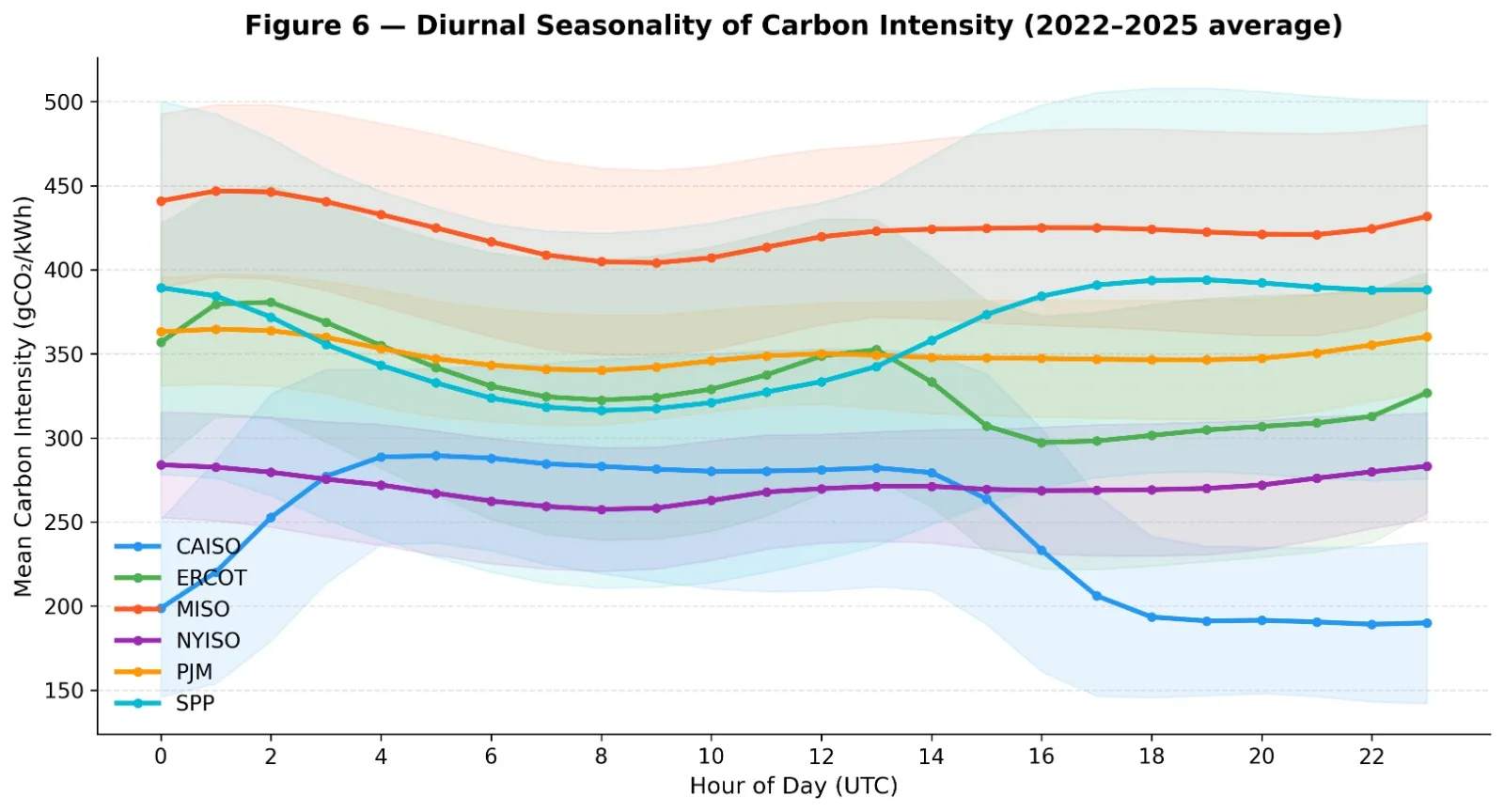
FIGURE 6 — DIURNAL SEASONALITY OF CARBON INTENSITY (2022–2025 AVERAGE)
CAISO drops dramatically after 16:00 UTC as solar peaks — the optimal scheduling window. MISO stays consistently high. The shaded bands are the uncertainty bounds — exactly what our model captures.
Diurnal seasonality of carbon intensity across regions
RESULTS · 05
RESULTS
Imported from the original dashboard content and adapted into the Carboncast layout.
Results

Measured outcomes are sensitive to workload pressure and deadline tightness. However, the green scheduler consistently wins on carbon-emission minimization.

The green scheduler always gives better emission results across varying scenarios

Discussion

Policy comparisons are highly sensitive to simulation fidelity. SLA ranking is preliminary, while the carbon-reduction direction is robust.

📚 PRIOR ART · 06
LITERATURE
SURVEY
Comparison against recent carbon-aware scheduling work and where our uncertainty-aware approach differs.
Paper (Year · Venue) Positive Points Gap
On the Limitations of Carbon-Aware Temporal and Spatial Workload Shifting (2024 · EuroSys) Strong real-world evaluation showing promised savings often fail under forecast/runtime uncertainty. Diagnoses problems but proposes no uncertainty-aware scheduling solution
LACS: Learning-Augmented Algorithms for Carbon-Aware Resource Scaling (2024 · ACM e-Energy) Learning-augmented online methods with competitive-ratio guarantees under uncertain demand. No SLA-risk modeling and no carbon-forecast uncertainty treatment
Uncertainty-Aware Decarbonization for Datacenters (2024 · HotCarbon) Conformal prediction gives valid confidence intervals for carbon forecasts across regions. Forecast uncertainty only; not integrated into scheduling decisions
Uncertainty-Aware Workload Prediction for Cloud Data Centers (2022/2024 · IEEE CLOUD / Cluster Computing) Probabilistic workload prediction (epistemic + aleatoric uncertainty) on Google/Alibaba traces. No downstream scheduling or risk-aware decision integration
Scheduling Real-Time Cloud Workflows with Execution Time Uncertainty (2023 · Concurrency and Computation) Integrates runtime uncertainty directly into deadline-aware workflow scheduling. No carbon-awareness or carbon-uncertainty modeling
Carbon-Aware Computing for Datacenters (2025 · IEEE Transactions on Power Systems) Google CICM: temporal shifting with carbon forecasts and virtual capacity curves. Primarily temporal; limited discussion of generalized spatial deployment
CASPER: Carbon-Aware Scheduling and Provisioning for Distributed Web Services (2023 · IGSC) Geo-distributed scheduling balancing carbon and latency; large emission reductions reported. Assumes reliable forecasts/flexibility; less coverage of broader workload types
Let's Wait Awhile: Temporal Workload Shifting Can Reduce Cloud Emissions (2021 · ACM/IFIP Middleware) Foundational temporal-shifting framing for delaying flexible jobs into greener windows. Relies on accurate future carbon predictions; ignores runtime-uncertainty risk
Using Geographic Load Shifting to Reduce Carbon Emissions (2022 · PSCC / Elsevier) Introduces locational marginal carbon emissions (λCO₂) for spatial shifting decisions. Mostly simulation/theoretical; limited production-cloud validation
Spatio-Temporal Load Shifting for Truly Clean Computing (2025 · Advances in Applied Energy) Joint spatial + temporal shifting framework to improve low-carbon electricity usage. Assumes high workload flexibility; limited production deployment evidence
Predicting Runtime and Resource Utilization of Jobs on Integrated Cloud and HPC Systems (2025 · Future Generation Computer Systems) Two-stage ML prediction across real scientific workflow platforms. Improves prediction but not risk-aware/carbon-aware scheduling decisions
Workload Time Series Prediction for Cloud Resources Using Attention Seq2Seq Models (2022 · Journal of Grid Computing) Attention Seq2Seq improves long-horizon workload forecasting on Google traces. Deterministic output; no uncertainty estimates or risk-based scheduling
Deep Learning-Based Workload Prediction in Cloud Computing to Enhance Performance (2023 · IEEE CLOUD) LSTM/GRU-based workload modeling for dynamic provisioning accuracy gains. Point predictions only; no probabilistic confidence or SLA-risk analysis
Towards Intelligent Cloud Scheduling: DynaSched-Net with Reinforcement Learning and Predictive Modeling (2025 · IEEE ICSP) Hybrid DQN + LSTM/Transformer scheduler improves utilization and response-time metrics. No explicit uncertainty, SLA-risk, or carbon-aware objective integration
START: Straggler Prediction and Mitigation for Cloud Computing Environments (2021 · IEEE CLOUD) Encoder-LSTM straggler prediction enables proactive mitigation and QoS improvements. No probabilistic runtime intervals or unified risk-aware scheduling framework